
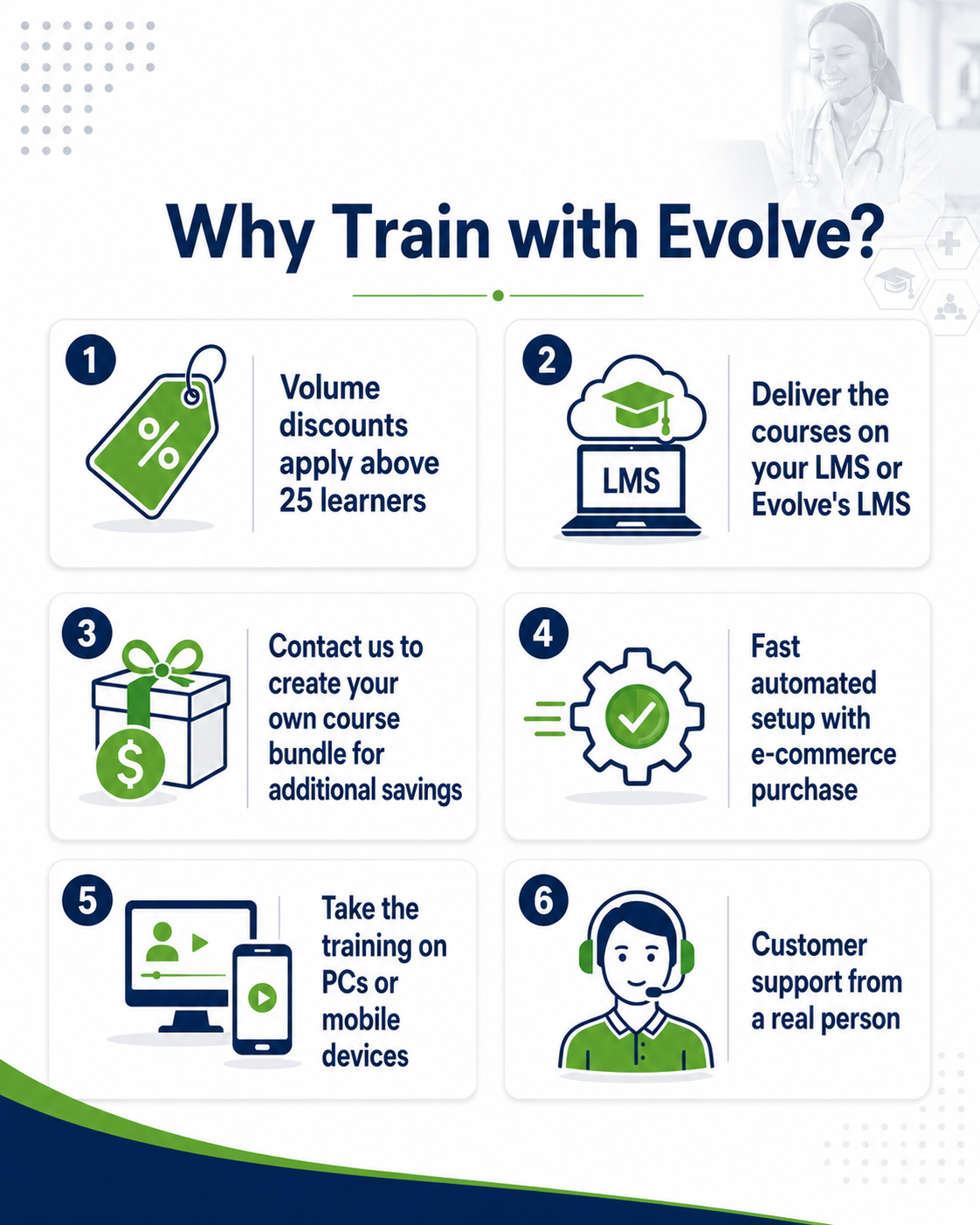
Select “Group” when purchasing training for your staff. Enter your organization or practice name in the “Group Name” field.
$14.00
— COURSE DESCRIPTION
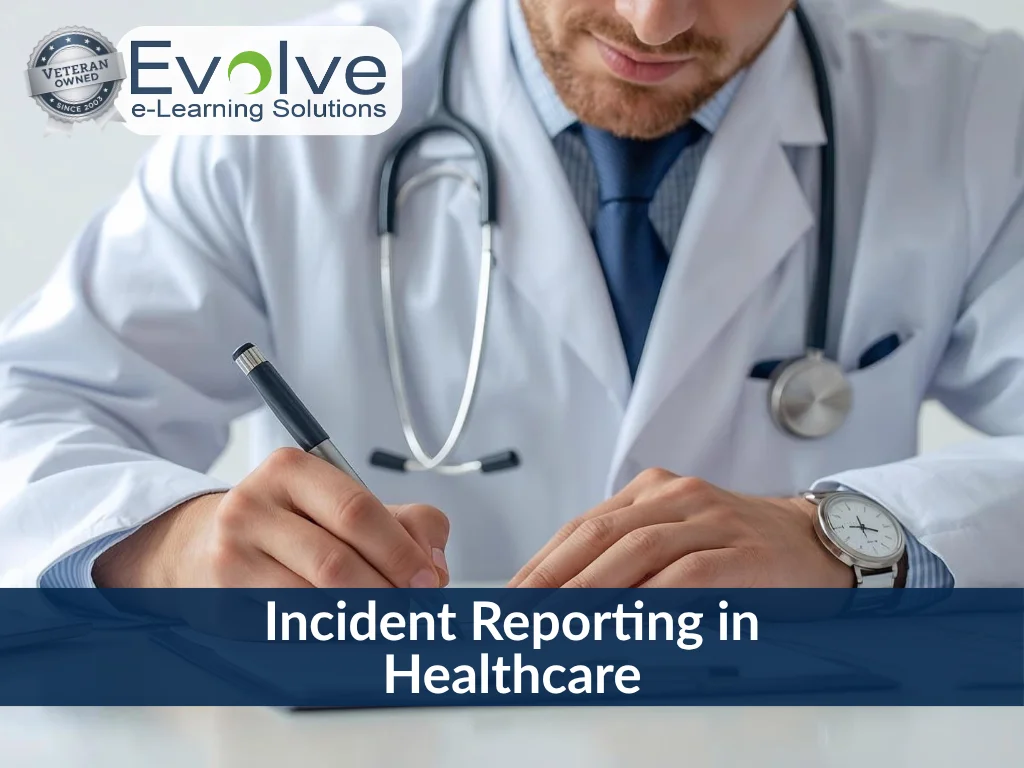
Incident Reporting in Healthcare
Healthcare facilities experience thousands of incidents annually—patient falls, medication errors, equipment failures, near misses, and workplace injuries. Many of these incidents go unreported because staff don’t understand what constitutes a reportable event, fear blame or retaliation, or don’t see the value in documenting “minor” incidents. This silence prevents organizations from identifying patterns, addressing root causes, and implementing preventive measures that could save lives and reduce liability.
The problem extends beyond simple under-reporting. When incidents are reported, the documentation is often incomplete, inaccurate, or opinion-based rather than factual. Staff may not understand the difference between harmful incidents, no-harm events, and near misses—each requiring different reporting protocols. Without proper training, incident reports become liability risks rather than quality improvement tools.
This focused course gives healthcare employees the knowledge to recognize reportable incidents, understand why reporting matters for patient safety and continuous improvement, and complete accurate incident reports with required information. Staff learn to distinguish incident categories, document facts without blame, and contribute to a just culture of safety.
Interested in saving? Add Incident Reporting in Healthcare to a bundle. Learn more below.
— COURSE DETAILS
- Define what an incident is.
- Explain why incident reporting is important.
- Distinguish between “Harmful”, “No-Harm”, and “Near Miss” incidents.
- Determine what information to include on an incident report.
- Introduction and Objectives
- Defining an Incident
- Incident Report Protocol
- Clinical Staff: Nurses, physicians, and allied health professionals involved in direct patient care
- Pharmacy Personnel: Pharmacists and pharmacy technicians who may encounter medication errors
- Support Services: Environmental services, dietary, transport, and facility maintenance staff
- All Healthcare Employees: Anyone working in healthcare settings who may witness or be involved in incidents
- Risk Management: Staff responsible for incident investigation and quality improvement
- New Employees: All new hires requiring orientation on incident reporting procedures
🎯
Crystal-clear learning objectives set expectations up front and guide learners through the course—so they stay focused, understand what matters most, and finish with confidence.
🎬
Engaging Videos and Professional Narration bring content to life with dynamic visuals and natural-sounding audio—making training more interactive, modern, and easier to absorb.
➡️
Guided, step-by-step navigation keeps learners on track and ensures every required section is completed—supporting consistency and better compliance outcomes.
🔖
Smart bookmarking automatically saves progress so learners can pick up exactly where they left off—no rewatching or hunting for their last page.
✅
Built-in practice that sticks with non-graded knowledge checks, scenarios, and exercises that reinforce key concepts and strengthen retention without pressure.
🔀
Randomized final assessments pulled from a question bank to keep testing fair, consistent, and resistant to answer-sharing—while still measuring the right learning outcomes.
🔗
Flexible LMS Integration Options SCORM-compliant courses work seamlessly with your existing LMS. Alternatively, use our enterprise-level Workplace LMS designed specifically for healthcare compliance training.
— CERTIFICATE & COMPLIANCE
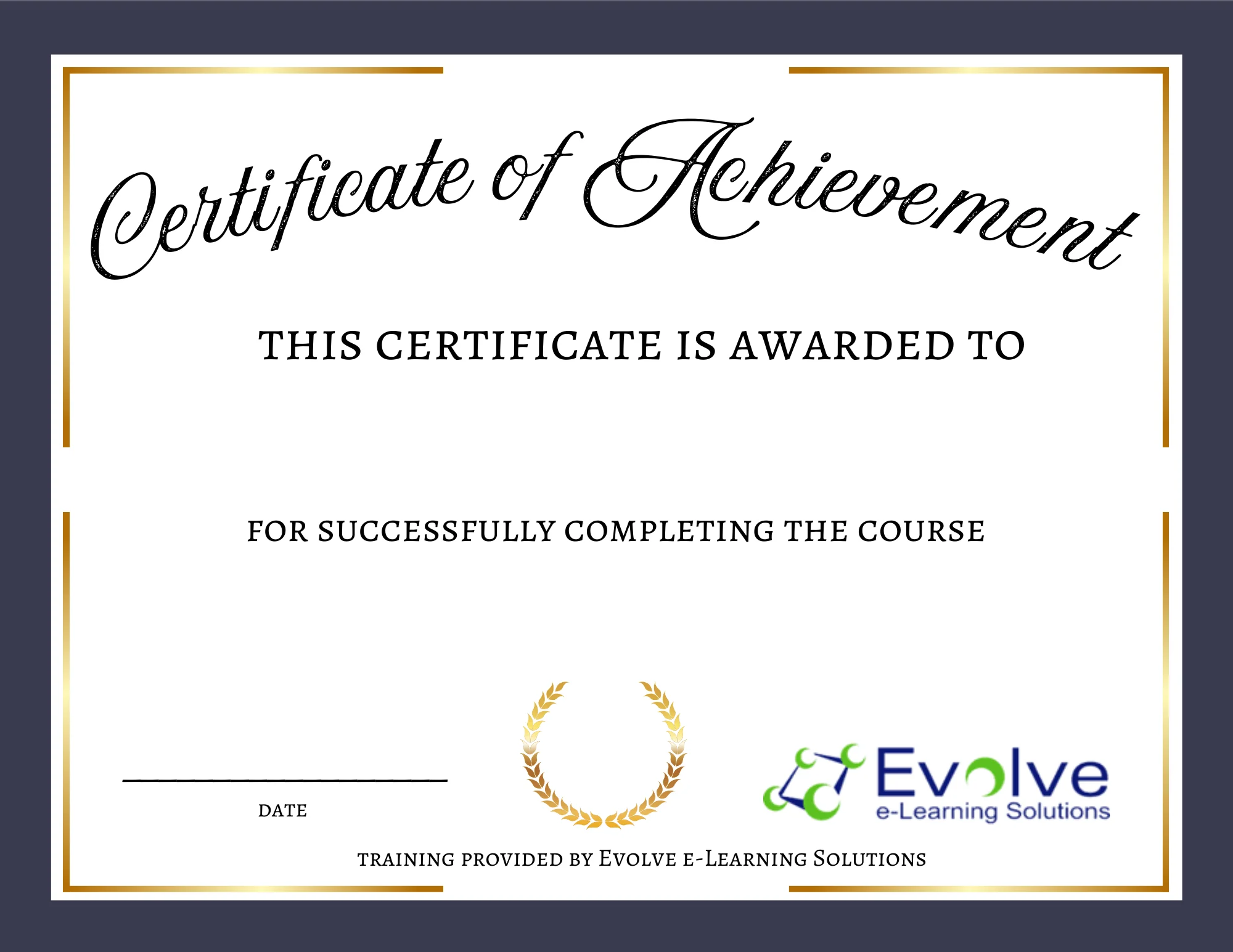
Audit ready with course certificates
Upon successful completion, learners receive an official certificate of completion documenting their incident reporting training for healthcare facility safety and quality assurance programs.
The course includes assessments that verify understanding of incident definitions, reporting requirements, and documentation best practices. Certificates are generated immediately and can be downloaded or printed for employee files and Joint Commission documentation.
Supports Compliance With:
- Joint Commission patient safety standards
- CMS Quality Assessment and Performance Improvement (QAPI) requirements
- State healthcare facility licensing regulations
- Hospital and clinic risk management programs
- Patient Safety Organization (PSO) reporting expectations
- Quality improvement and continuous learning initiatives
— CUSTOM & PREMADE BUNDLES
Save More When You Bundle
Buying courses together is almost always smarter than buying one at a time. We offer two ways to do it.
Pre-Made Bundles
Our most popular course combinations, packaged at a discount off individual pricing — ready to purchase instantly.
- Healthcare Compliance Ultimate – 23 Course Bundle
- Healthcare Compliance Complete – 14 Course Bundle
- Healthcare Compliance Essentials – 7 Course Bundle
- Healthcare Compliance Complete: Texas – 14 Course Bundle
- Healthcare Compliance Essentials: Texas -7 Course Bundle
- OSHA Essentials – 5 Course Bundle
- Hand Hygiene & Infection Control – 3 Course Bundle
- HIPAA BA & Medicare: Fraud & Abuse – 2 Course Bundle
- HIPAA CE & Medicare: Fraud & Abuse – 2 Course Bundle
Build Your Own Bundle
Need a specific mix of courses? The Evolve Bundle Builder lets you hand-pick from our full catalog and see your price update in real time. No sales call, no waiting for a quote.