
Workplace Ergonomics Training Course Overview
Workplace ergonomics training is critical for preventing musculoskeletal disorders, which account for over 30% of workplace injuries and cost organizations billions in workers’ compensation claims, lost productivity, and employee turnover. Many of these injuries are preventable with proper ergonomic awareness and workstation setup.
This practical training course introduces employees to ergonomic principles and common musculoskeletal disorders, then provides concrete strategies to reduce risk in their daily work. From office workstations to physical labor environments, employees learn how small adjustments can prevent painful, costly injuries.
The course goes beyond theory to show exactly how to position chairs, monitors, keyboards, and other equipment to minimize strain, improve posture, and reduce repetitive stress injuries—giving your team tools they can implement immediately.
What You’ll Learn
✓ Identify common musculoskeletal disorders (MSDs) including carpal tunnel syndrome, tendonitis, and lower back pain, along with their warning signs
✓ Recognize ergonomic risk factors in different work environments and job tasks that contribute to injury
✓ Set up workstations properly with correct positioning of chairs, monitors, keyboards, and mice to reduce strain
✓ Apply proper body mechanics when lifting, reaching, and performing repetitive tasks
✓ Adjust their work environment to accommodate individual needs and prevent cumulative trauma
✓ Implement practical prevention strategies including stretching, breaks, and posture improvements they can use daily
Workplace Ergonomics Training Course Content
Module 1: Understanding Ergonomics & Musculoskeletal Disorders
- What ergonomics means in practical terms
- The business and personal costs of MSDs
- How cumulative trauma develops over time
- Common workplace risk factors
Module 2: Common Musculoskeletal Disorders
- Carpal tunnel syndrome and wrist injuries
- Tendonitis and repetitive strain injuries
- Lower back pain and spinal issues
- Neck and shoulder problems
- Recognizing early warning signs before serious injury occurs
Module 3: Ergonomic Risk Factors
- Repetitive motions and overuse
- Awkward postures and positions
- Forceful exertions and heavy lifting
- Contact stress and pressure points
- Environmental factors (lighting, temperature, workspace layout)
- Job task analysis and risk assessment
Module 4: Office Workstation Ergonomics
- Proper chair adjustment and lumbar support
- Monitor height and distance positioning
- Keyboard and mouse placement
- Desk height and work surface organization
- Laptop ergonomics and solutions
- Phone and document positioning
- Creating a neutral body position
Module 5: Prevention Strategies
- Stretching and micro-break techniques
- Posture awareness and correction
- Equipment and tool selection
- Job rotation and task variety
- Requesting workplace accommodations
- Building healthy work habits
See Our Courses In Action
Preview sample courses to see our format, content quality, and interactive features before you purchase.
Who Should Take Workplace Ergonomics Training
💼 Office Workers
Employees who spend significant time at computers and desk workstations
🏭 Manufacturing & Warehouse Staff
Workers performing repetitive tasks, assembly work, or material handling
🏥 Healthcare Professionals
Clinical staff who lift patients, stand for long periods, or perform repetitive procedures
🚚 Drivers & Transportation
Personnel who spend hours in vehicle seats and handle cargo
👷 Construction & Trades
Workers using tools, lifting materials, and working in varied positions
🏪 Retail & Hospitality
Cashiers, stock clerks, housekeeping staff, and food service workers who perform repetitive scanning, stocking, lifting, and standing for extended periods
Certificate & Compliance
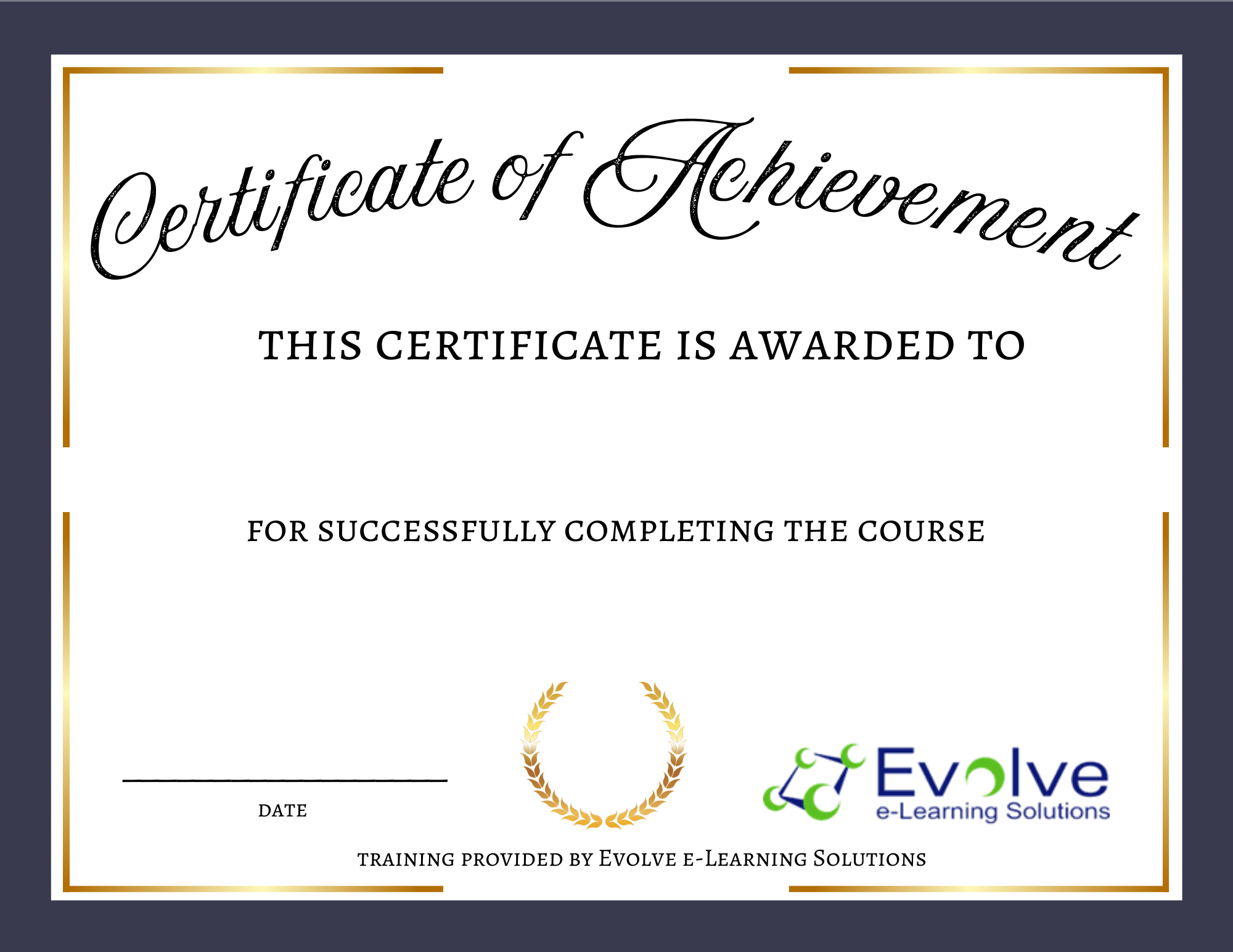
Upon successful completion, learners receive an official certificate of completion documenting their ergonomics training for workplace safety records.
The course includes interactive assessments that test both knowledge and the ability to identify ergonomic hazards in workplace scenarios. Certificates are generated immediately and can be downloaded or printed for employee files.
Supports Compliance With:
- OSHA General Duty Clause requirements for providing a safe workplace
- OSHA ergonomics guidelines and recommended practices
- Workers’ compensation risk reduction programs
- Corporate safety and wellness initiatives
- Industry-specific ergonomic standards
Choose How Your Team Learns
 Use our ELMS
Immediate access with zero setup
Fast & Easy Setup
Automatic progress tracking and reporting
Built-in certificate generation
No technical expertise required
Automated Course Recertification
 Use Your Own LMS
License SCORM files for your system
Integrate with your existing platform
Maintain centralized training records
Compatible with all major LMS platforms
Full technical specifications provided
Dedicated support included
Why Choose Evolve?
🎯
Expert-Developed Content
Courses feature realistic scenarios, engaging multimedia, and knowledge checks to reinforce learning. Content developed by compliance experts ensures accuracy and relevance.
📱
Accessible Anywhere
Complete training anytime, anywhere on PCs, tablets, or smartphones. Your team can learn at their own pace without disrupting daily operations or scheduling conflicts.
🎬
Engaging & Effective
Scenario-based learning & interactive elements promote retention better than lecture-style courses
📊
Trackable and Reportable
Monitor completion rates, track progress, and generate compliance reports. Maintain detailed records for audits and regulatory requirements.
💰
Transparent Pricing
Simple per-seat pricing with no hidden fees, surprise charges, or mandatory bundles. Volume discounts make compliance training affordable for organizations of any size.
⚡
Easy Implementation
Begin training your team immediately – no lengthy implementation or waiting periods
📈
Scalable Solutions
Whether training 5 employees or 500, our platform scales to meet your organization’s needs. Custom course bundles available to address your specific training requirements and budget.
✓
Consistent Quality Training
Every learner receives the same high-quality, up-to-date content. Standardized training ensures your entire organization maintains consistent compliance knowledge.
💬
Ongoing Support
Dedicated customer support available to assist with questions, technical issues, or training customization needs.
Workplace Ergonomics Training Course FAQs
Musculoskeletal disorders (MSDs) are the #1 cause of workplace disability in the United States, responsible for nearly 30% of all workers’ compensation costs. Most MSDs develop gradually from repeated exposure to ergonomic risk factors employees don’t recognize—awkward postures, repetitive motions, or improperly adjusted workstations. Without training, workers unknowingly damage their bodies performing everyday tasks. Ergonomics training gives employees the knowledge to identify risks and make simple adjustments that prevent painful, career-ending injuries before they develop.
This course takes 22 minutes to complete and works around your schedule. Employees can finish it during a lunch break, split it across multiple sessions, or complete it after hours. The self-paced online format eliminates the need to coordinate schedules, book meeting rooms, or halt operations for training sessions. No travel time, no waiting for the next scheduled class—employees can start learning within minutes of enrollment and immediately apply techniques at their workstations.
Yes, and often more effective for knowledge retention and practical application. Online training allows employees to pause and review complex information, watch demonstrations repeatedly, and learn at their optimal pace without feeling rushed or self-conscious. Interactive scenarios and assessments ensure comprehension in ways traditional lecture formats can’t match. Employees can access the course from their actual workstation and immediately test adjustments while the information is fresh. Plus, online delivery ensures 100% consistency—every employee receives identical, expert-developed content rather than variable quality depending on who delivers the training.
Absolutely—home ergonomics training is more important than ever. Remote workers typically lack proper office furniture and ergonomic equipment, increasing their injury risk. They’re working from kitchen tables, couches, and makeshift desks with laptops in their laps. This course teaches remote employees how to optimize whatever workspace they have, use household items to improve ergonomics (books as monitor stands, rolled towels for lumbar support), and recognize when they need to request equipment from their employer. You remain liable for work-related injuries even when employees work from home, making training essential for your remote workforce.
Effective ergonomics training goes beyond “sit up straight” advice. This course teaches employees to recognize the warning signs of developing MSDs, understand how cumulative trauma occurs, identify specific risk factors in their work environment, and implement practical prevention strategies they can use immediately. Content includes detailed workstation setup (chair height, monitor distance, keyboard placement), proper body mechanics for lifting and reaching, stretching techniques, environmental factors, and how to request workplace accommodations. The training addresses both office ergonomics and physical labor environments.
PROTECT YOUR TEAM TODAY
Prevent Costly Injuries With Proper Ergonomic Training
Musculoskeletal disorders don’t happen overnight—they develop from repeated exposure to risk factors employees often don’t recognize. Give your team the knowledge to protect themselves and reduce your organization’s injury rates.
Trusted by healthcare organizations, manufacturers, corporate offices, and distribution centers nationwide